Build reporting trust
Clarify the definitions, caveats, ownership, and evidence behind the numbers that matter.
Full field guide
Build reporting trust. Accelerate decision velocity. Eliminate Data Tax
The strategic field guide for leaders, operators, and data teams who need a clearer way to understand why numbers drift across the Data Value Chain before dashboards, automation, and AI scale the confusion. It keeps the focus on business meaning: which definitions are trusted, where the Semantic Layer Gate belongs, and when a number is safe to use.
Purchase details
This is a one-time digital purchase. After checkout, Lemon Squeezy sends the download access and receipt by email. The book is a self-serve digital product and does not include bespoke consulting, advisory work, or implementation support.
Inside the book
Clarify the definitions, caveats, ownership, and evidence behind the numbers that matter.
Reduce meeting drag by helping teams agree what the numbers mean and when they are safe to use.
Expose the hidden cost of checking, reconciling, rebuilding, and explaining reports nobody fully trusts.
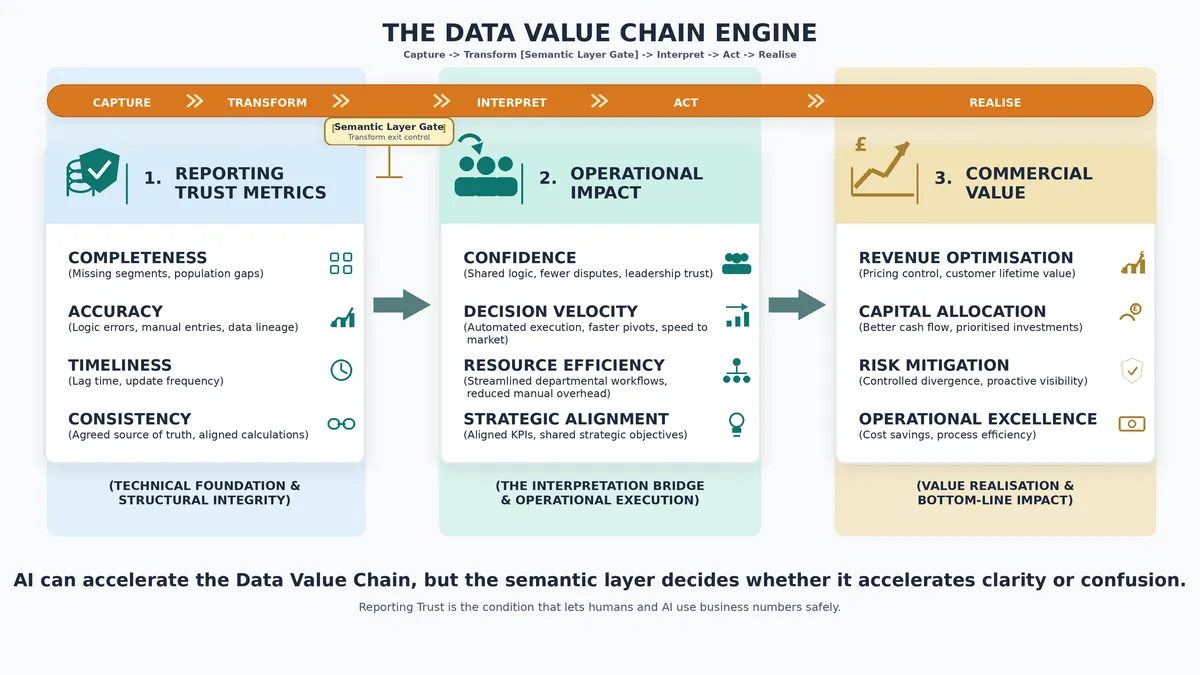
Understand why the Semantic Layer Gate sits at the exit of Transform, before interpretation, action, and AI-assisted decisions.
Watch Reporting Trust Lab
Choose an episode to watch one Reporting Trust problem at a time. The player only connects to YouTube after you press play.
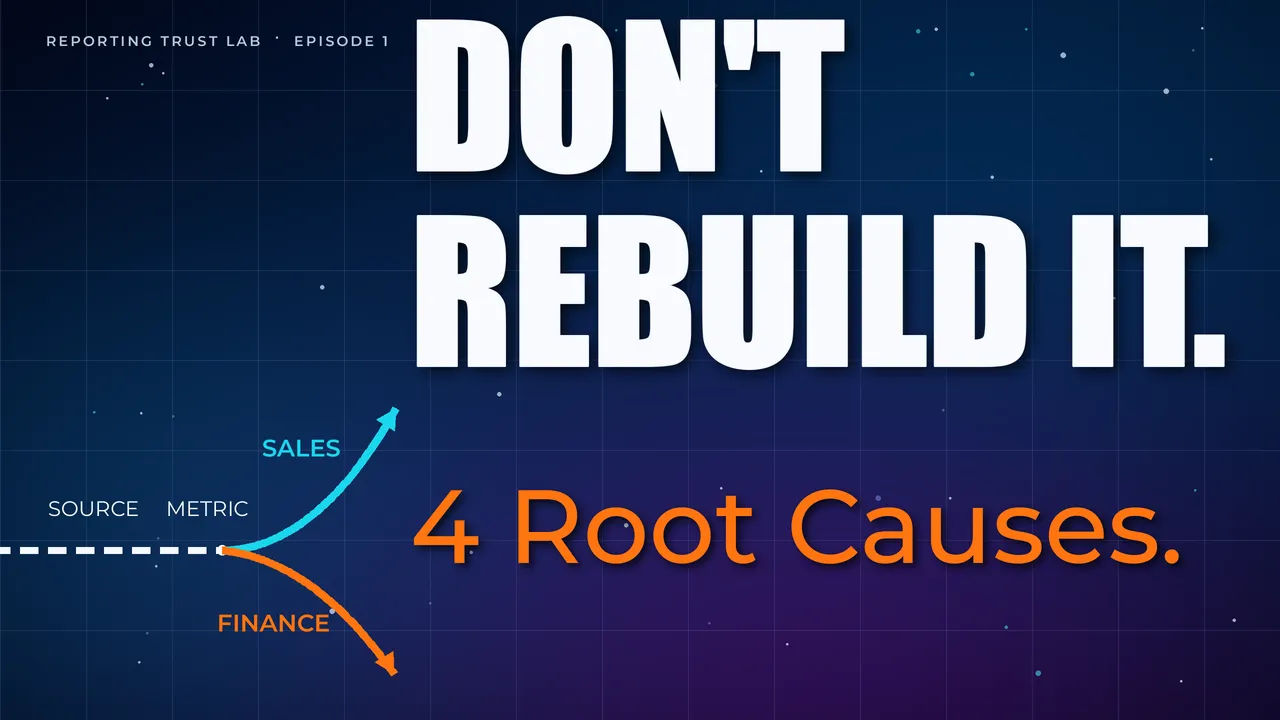
Introduction · Chapter 3: warning signs and four failure modes
Read the companion guideIntroduction: tolerable divergence · Chapter 3: decision-first diagnosis
Read the companion guideChapter 2: lineage and meaning · Chapter 10: one-decision review
Read the companion guideCore framework
The book uses the Data Value Chain Engine to connect reporting trust metrics, operational impact, and commercial value in one operating picture: Capture -> Transform [Semantic Layer Gate] -> Interpret -> Act -> Realise.
Questions
It is for founders, operators, finance leaders, analytics leaders, and data teams who need business numbers to be trusted before more dashboards, automation, or AI are added.
It helps you understand why dashboards, finance packs, spreadsheets, and source systems can disagree, then gives you a shared language for restoring reporting trust.
Both, but it starts from the business decision. The book connects leadership concerns such as decision drag and confidence with practical data topics such as definitions, ownership, caveats, source-to-report logic, and the wider Data Value Chain.
Yes. AI can accelerate the Data Value Chain, but the semantic layer decides whether it accelerates clarity or confusion. The book helps you identify which metrics are safe to automate around and which foundations need attention first.
No. It is the gate at the exit point of Transform: the place where definitions, ownership, caveats, and business meaning are checked before people or AI interpret the number.
No. The book is a self-serve digital download. Bespoke consulting, advisory work, implementation support, or review of your organisation's data would need to be agreed separately.
Both books · save £6
Your AI Is Guessing for the head of data, and Your Numbers Don't Match for the leadership team you need on side. Bought separately they are £28.
£28 £22 Save £6 · Both books in PDF and HTML
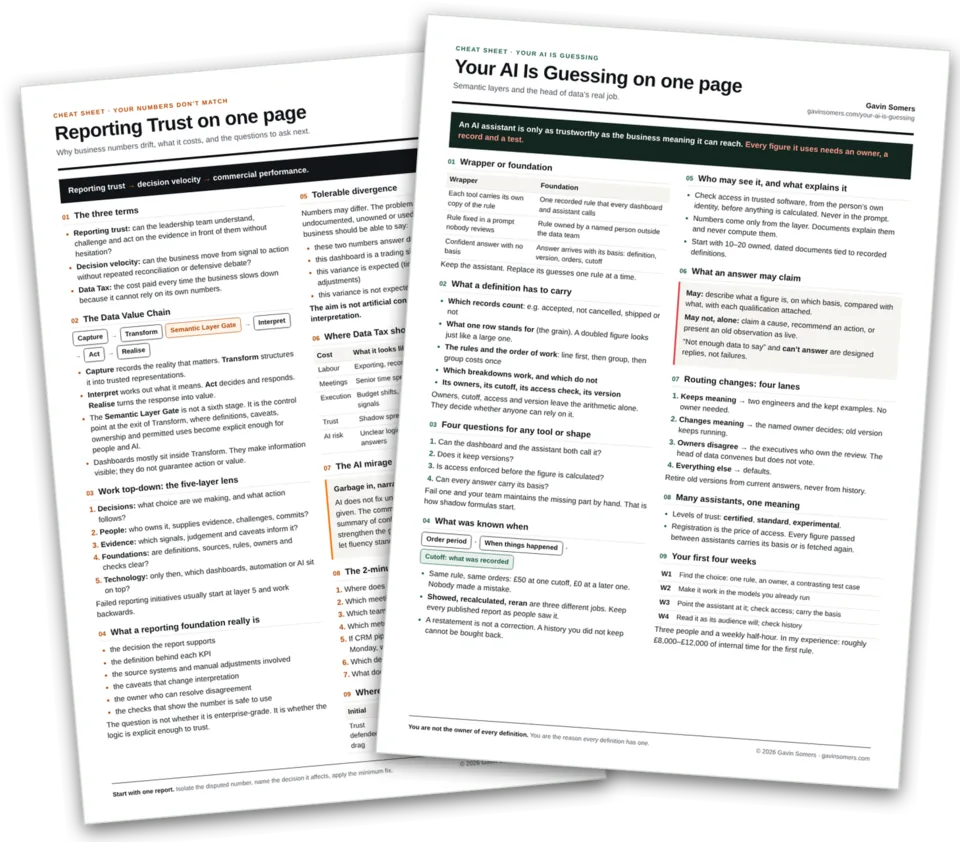
Free cheat sheet pack
Both books on one page each: Your AI Is Guessing for the data leader, and Reporting Trust for the leadership team.